The separation of librarians from libraries

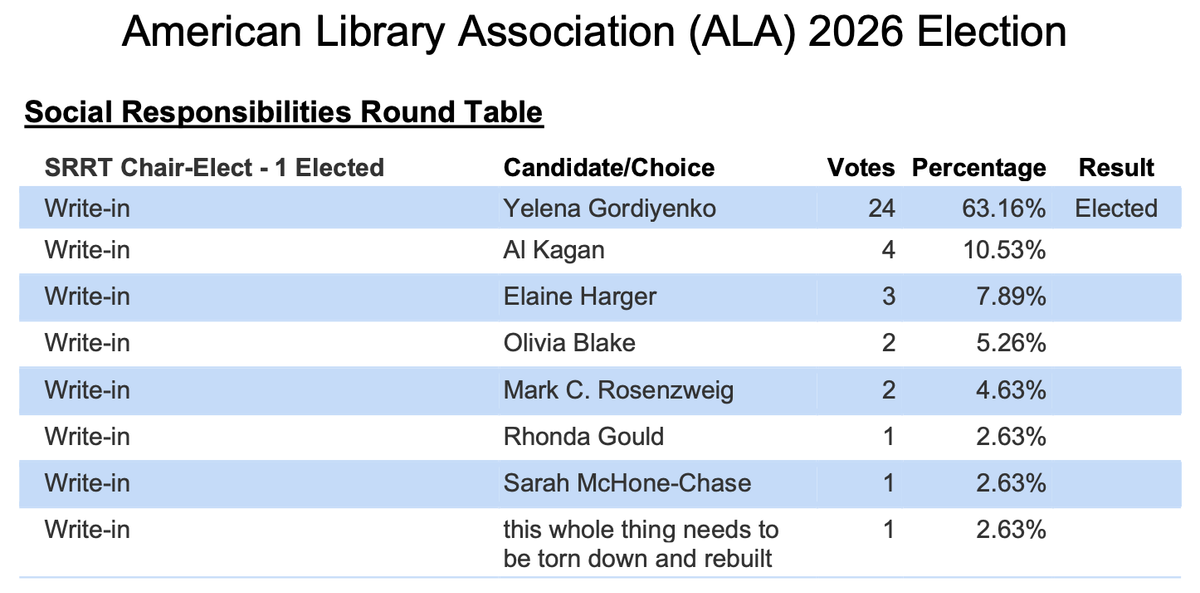
The American Library Association (ALA) has been steadily fading during my 27 years as a member, and something about this particular pictured result from this year's ALA election crystallized that regression for me. In this year of all years, no one nominated themselves to lead the Social Responsibilities Round Table (SRRT). And one voter just wrote in "this whole thing needs to be torn down and rebuilt".
It's not just SRRT: Five of the 18 ALA round tables had no nominee for their chair position. Ten others had only a single nominee.
Is it time to acknowledge that the once-overwhelming overlap between libraries and librarians has shrunk and will continue to shrink, to the point where (as several people have suggested in recent years) we need both an American Library Association and an American Librarians Association? As library vendors have been absorbed by multinational corporate behemoths, libraries have brought in more lawyers. As library resources shift ever more online, libraries have brought in more technicians and programmers. As library buildings and equipment become more complex, librarians have brought in more staff from the trades. Libraries are less and less a world designed primarily by librarians working to standards set by library organizations. Librarians will always be the heart of a library--of that I am sure--but the heart is only one organ in the body, and it is a specialized organ.
The American Library Association is celebrating its 150th anniversary this year. It might be time for it to return to its roots as a group of the people who manage libraries, whether those people have a master's degree in library science or not. People who aspire to excel at being professional librarians can separate into their own group (perhaps modeled on the newly merged ASIS&T / SLA organization) that would be more focused. Perhaps with more coherent organizations, we'd see a return to more active professional involvement.